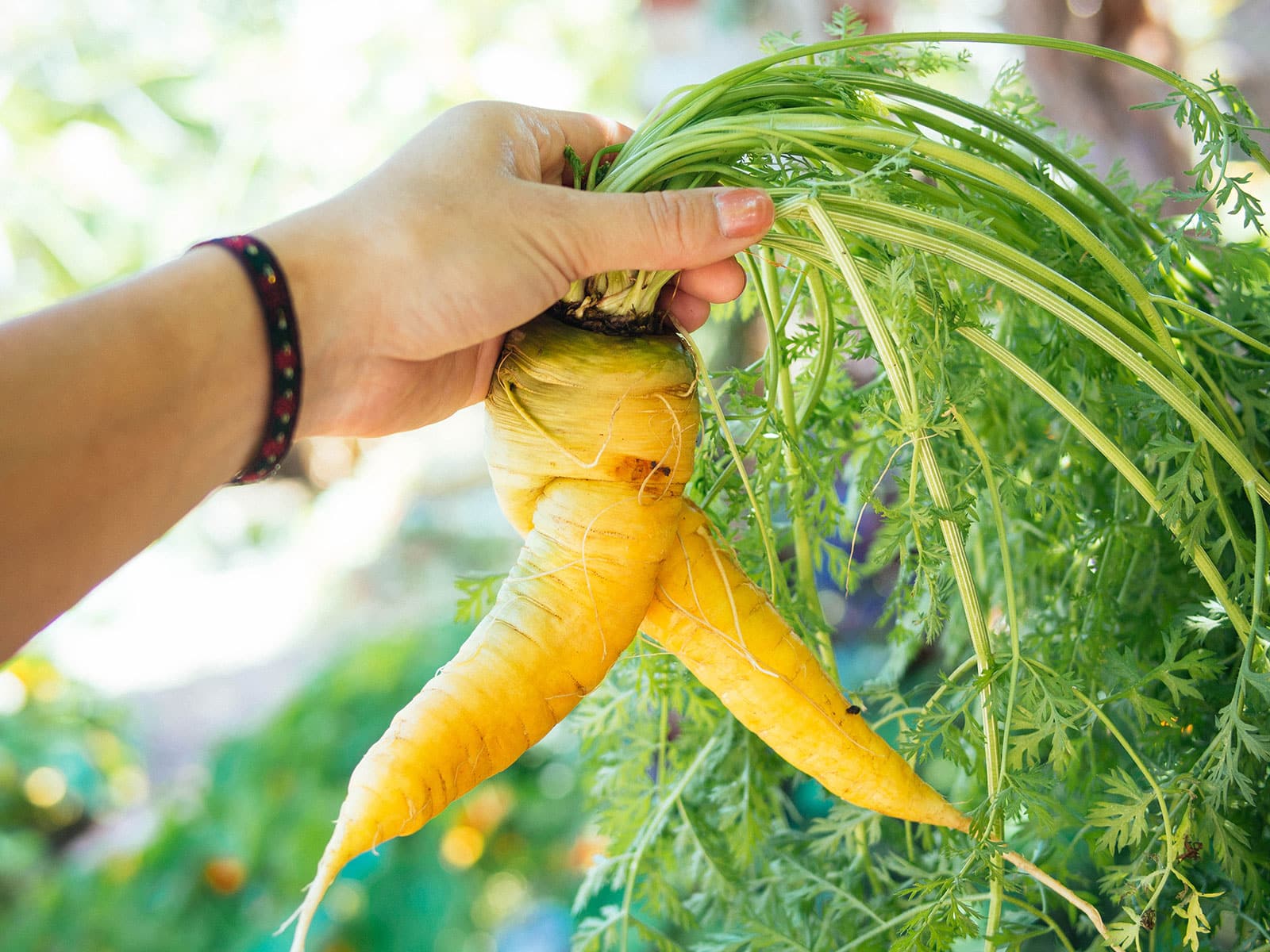
why your carrots grew legs
|
Let's talk about carrots, since a lot of us are pulling up the last of them right now and finding out how they really did. (The good part grows underground, so harvest day is kinda like unwrapping a tasty present.) I know, a carrot with legs looks like something went horribly wrong—but it's almost always still good to eat, and it's telling you exactly what to fix for next time. When I first started growing carrots in my old Southern California garden, I used to tell friends my wonky ones were just "organic." Turns out they were trying to tell me something about my soil. So I put together a troubleshooting guide for the problems I see most often: How to Fix 10 Common Carrot Growing Problems A couple of them surprise people. Like hairy carrots: if yours came up covered in tiny branching roots, you probably fed them too well. Excess nitrogen does that. Skip the fertilizer next round and just add a layer of compost at planting time, which also loosens up the soil so your carrots grow straight instead of forking around every rock and clod. Another one: if any carrots in your bed are sending up a tall central stalk right now, pull them today. Once those flowers open, the root turns tough and woody. (Or leave one or two to bloom. Pollinators go nuts for those flat, umbrella-shaped flower heads, and you can save the seeds when they fade.) The post also covers why carrot seeds can take three whole weeks to sprout (and the planting depth that keeps them from sprouting at all), how I thin seedlings without disturbing the roots, whether green shoulders are safe to eat, and the cheapest way to keep carrot rust flies out of your bed.
Seasonal tipsHow healthy are your vegetables?I read a really interesting article this week in The Telegraph: Vegetables half as nutritious as they were in the 1960s. (The article requires an email signup to read, so I'll summarize it here.) It says that a new study from researchers at Deep Science Ventures found that humans need to consume 2x the number of vegetables to get the same level of minerals (like potassium, magnesium, and copper) as there would've been in their food in the 1960s. Turns out, many crops have lost 20–50% of several key nutrients. How crazy is that?! The decrease in nutrients is a problem when it comes to common guidance on how many servings you should eat per day (or if you're vegan/vegetarian). It's attributed to declining soil quality and crops being selectively bred for commercial use. I actually talked about this in a post I wrote a while ago on why you should grow your own food. Grocery store vegetables are often hybrids because they're easier for the farmer to grow, harvest, and ship. That's why you don't ever see unusual heirlooms like Great White tomatoes or dragon's egg cucumbers at the store. Maybe they're a touch fussier to grow than hybrids, but what they lack in ultra disease resistance and turbocharged maturity, they more than make up for in flavor and nutritional value. And it all starts with the soil. This seems like a good time to plug my online, self-paced course, Lazy Gardening Academy. 😉 I have an entire module dedicated to soil building because without good soil, your plants will suffer (and fertilizer can't fix it). I realize not everyone can jump in on a course like this, so I want to share another resource with you: Eating on the Wild Side by Jo Robinson. I bought this incredible book when it came out 13 years ago and learned so much about food, flavor, and nutrition. Not many of us have acquired a taste for wild plants, despite how nutritious they are, but Jo's book shows you how to choose and prepare modern varieties of fruits and vegetables to get more out of them. A must read if you grow food or buy produce. Let me know what you think if you get it. P.S. Pulled up something weird this week? Match it to the photos in my carrot troubleshooting guide—forked, cracked, hairy, and bolted carrots are all in there. P.P.S. Most carrot problems start in the soil, and fall is the easiest time to fix it. Clear out the rocks, top your beds with compost, and let winter do the heavy lifting. In Lazy Gardening Academy, I'll show you how to build loose, crumbly, nutrient-rich soil by spring with a lot less work. |
Garden Betty
For people who want to grow more food with less work. 🌱 This is my weekly newsletter loved by 38,000+ subscribers—here's what one of them had to say: "These are not the regular run-of-the-mill garden-based emails. You actually touch on more unusual tidbits that encourage me to keep growing and learning."